1
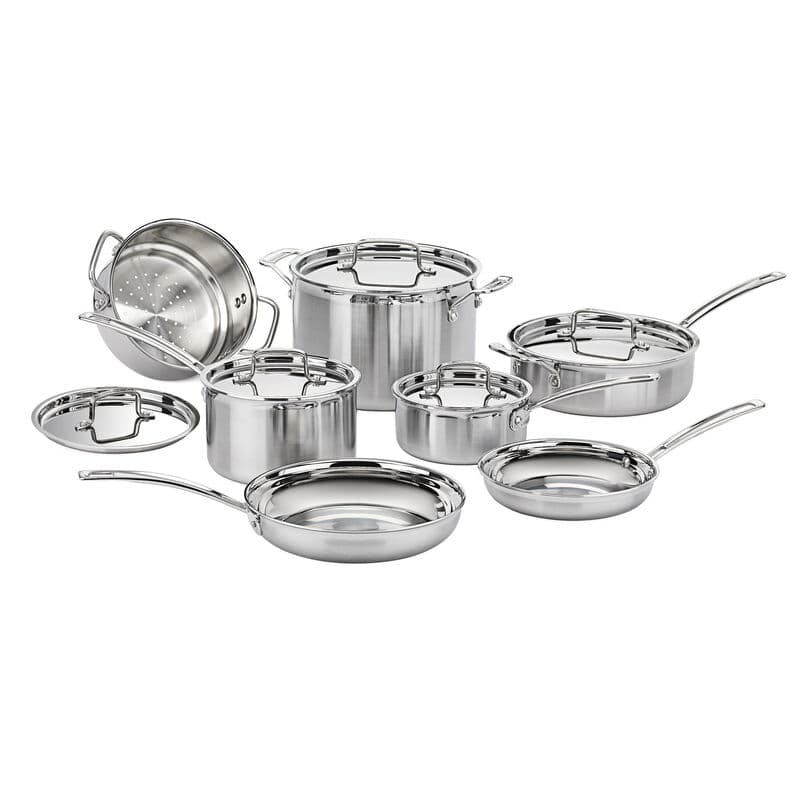
MultiClad Pro
Best overall
Fully clad triple-ply stainless
Searing, sauces, induction & longevity
Made for the way you cook
From a first cookware set to the pan that completes your kitchen. Explore collections, compare materials and find the pieces that fit your stove and your everyday meals.
As an Amazon Associate I earn from qualifying purchases.
The short answer
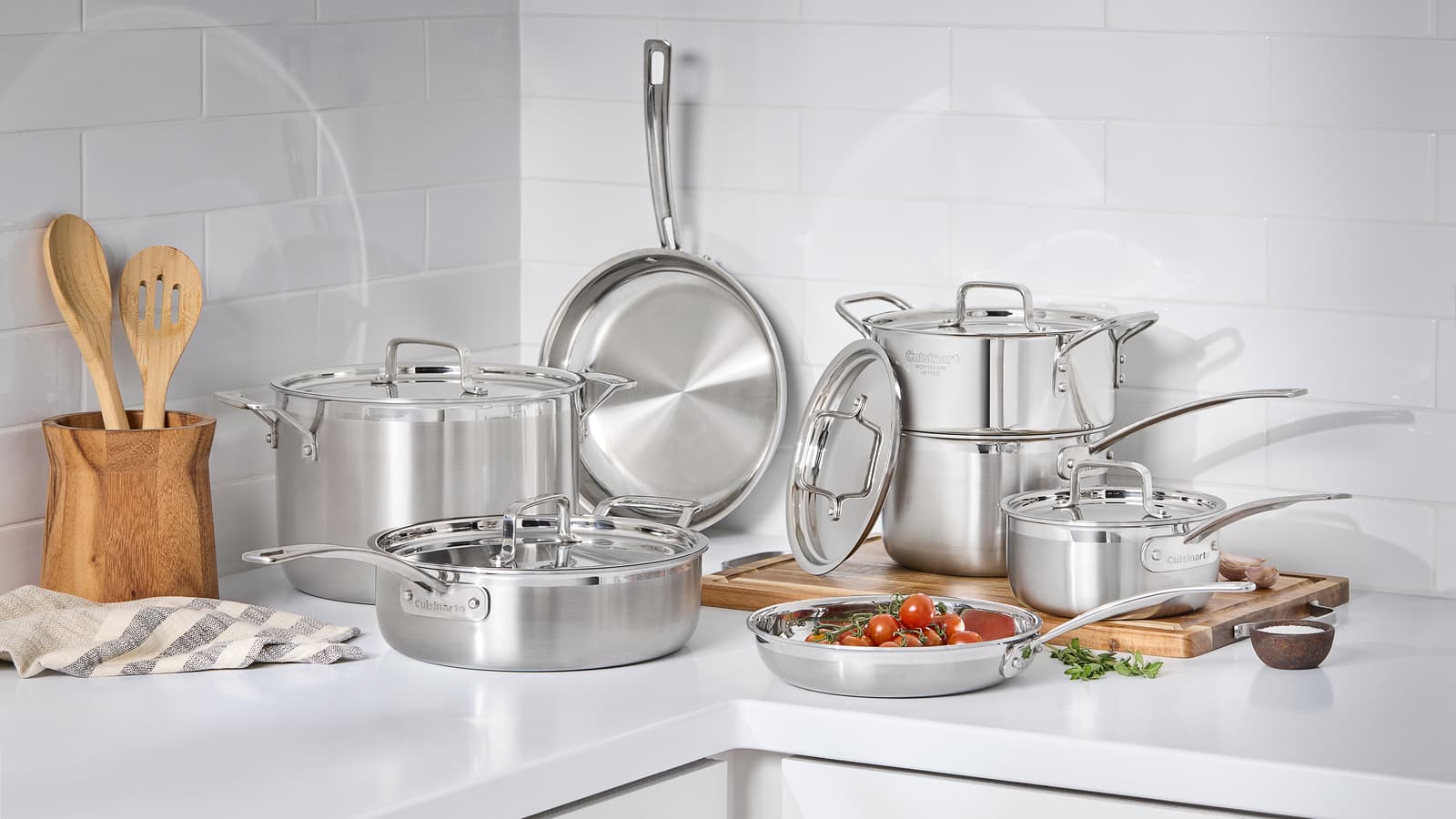
MultiClad Pro is our best overall Cuisinart cookware pick because its aluminum core runs through the base and sidewalls, giving serious cooks more even heat control for searing, sauteing, and pan sauces. Choose Chef's Classic Stainless when value matters more than fully clad construction. Choose Chef's Classic Hard Anodized for easier release and cleanup, or Advantage Nonstick for a lightweight starter set.
Our starting shortlist
These are not interchangeable bundles. The ranking reflects heat path, cooking surface, useful pieces, cooktop fit, and how much maintenance each line asks from you.
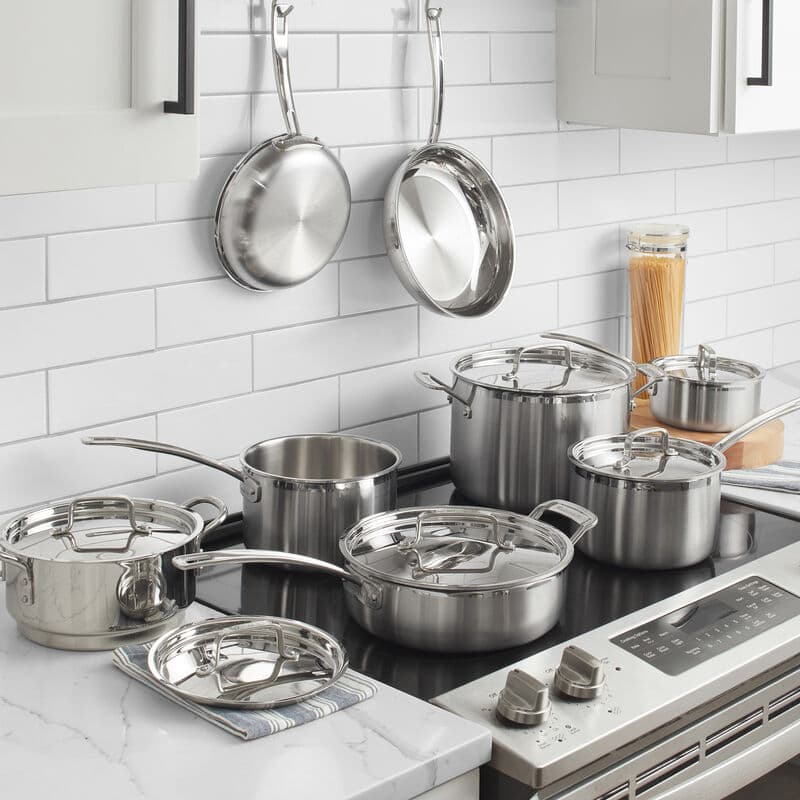
Best overall
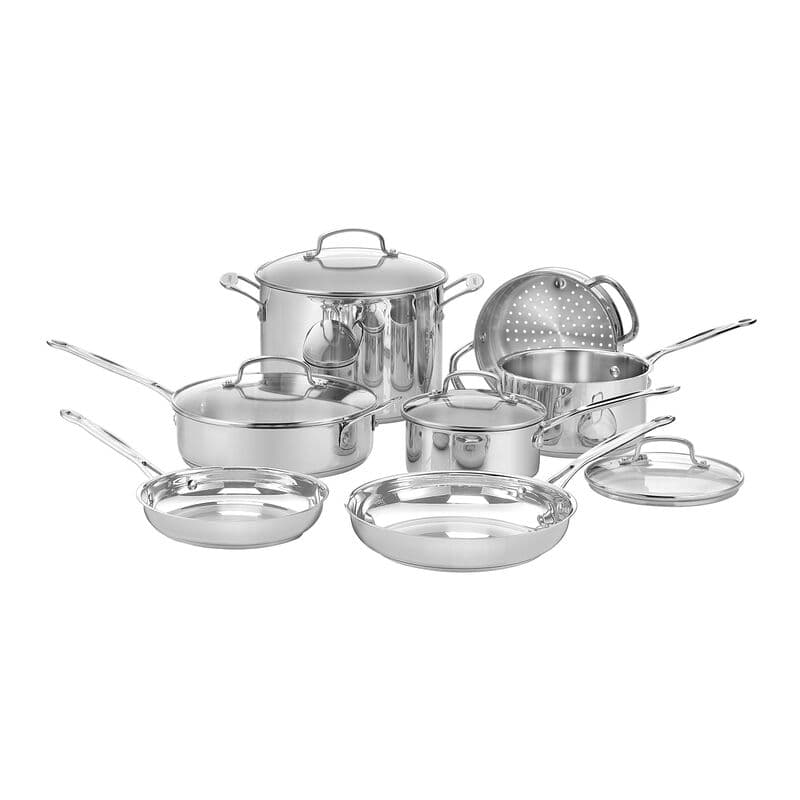
Best value stainless
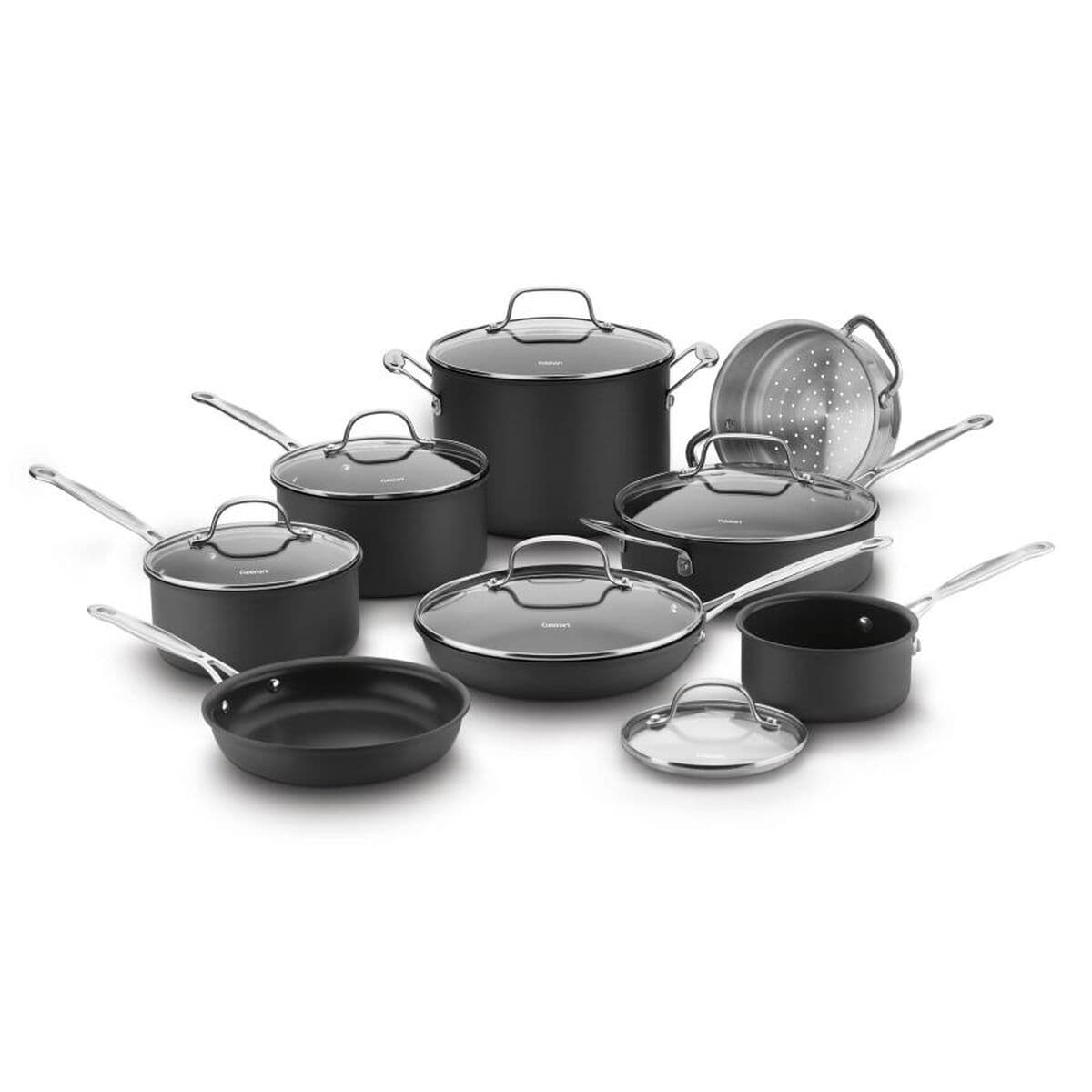
Best easy-clean upgrade
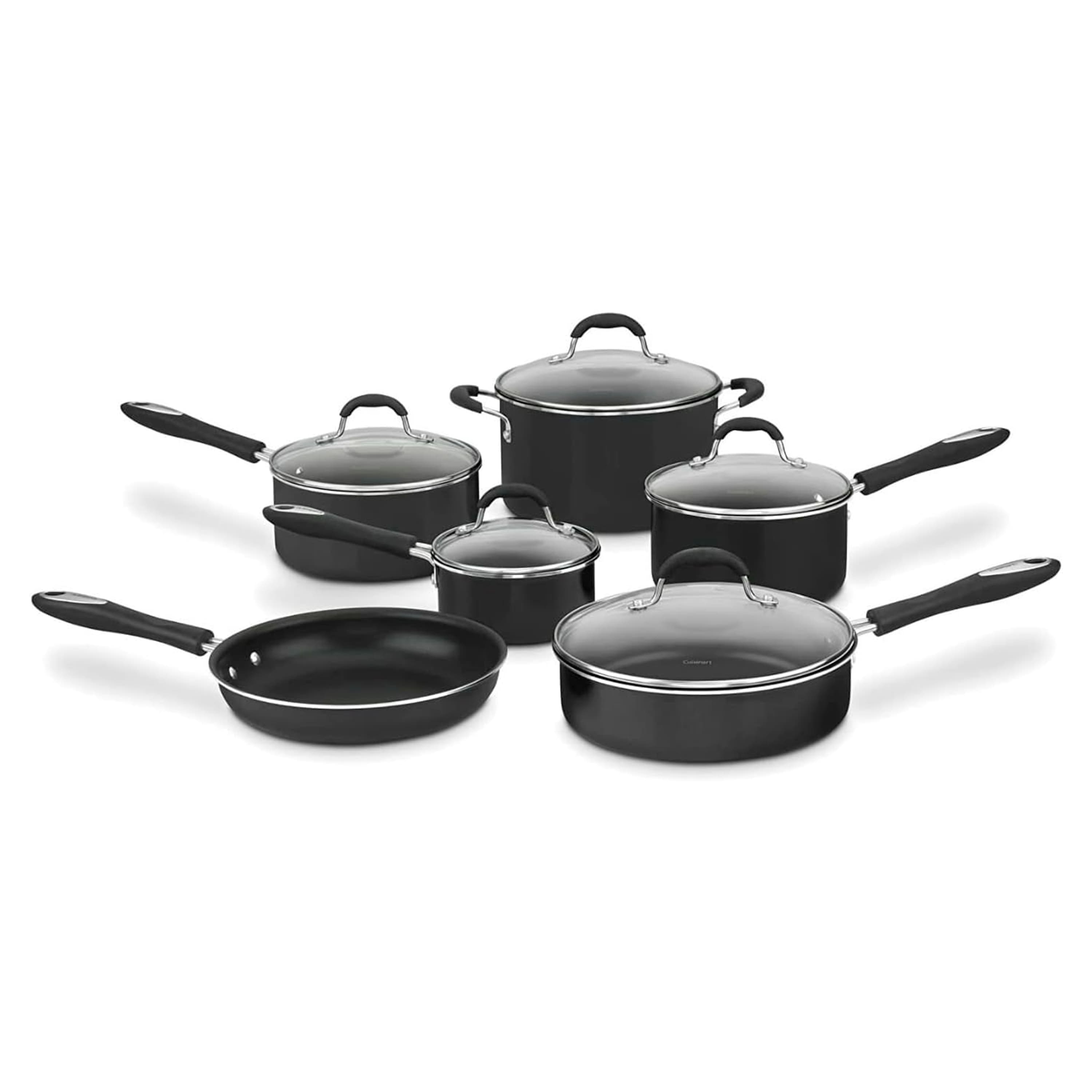
Best starter nonstick
Why the brand is worth comparing
The catalog spans entry-level nonstick, disc-base stainless, fully clad stainless, ceramic surfaces, and enameled cast iron. That range lets you solve different kitchen problems without pretending one material should do everything.
Move from Chef's Classic to Professional Series or fully clad MultiClad Pro based on heat control, not branding alone.
Start with a coherent bundle, then add the skillet, saucepan, or stockpot your cooking actually needs.
Use stainless for browning, nonstick for delicate foods, and cast iron for heat retention and slow cooking.
The 2026 line map
The logo is the same. The heat path, cooking surface, maintenance, and expected lifespan are not. Filter by material, then compare the construction before you compare bundle size.
7 of 7 cookware lines match your filters.
Performance leader
Midrange bridge
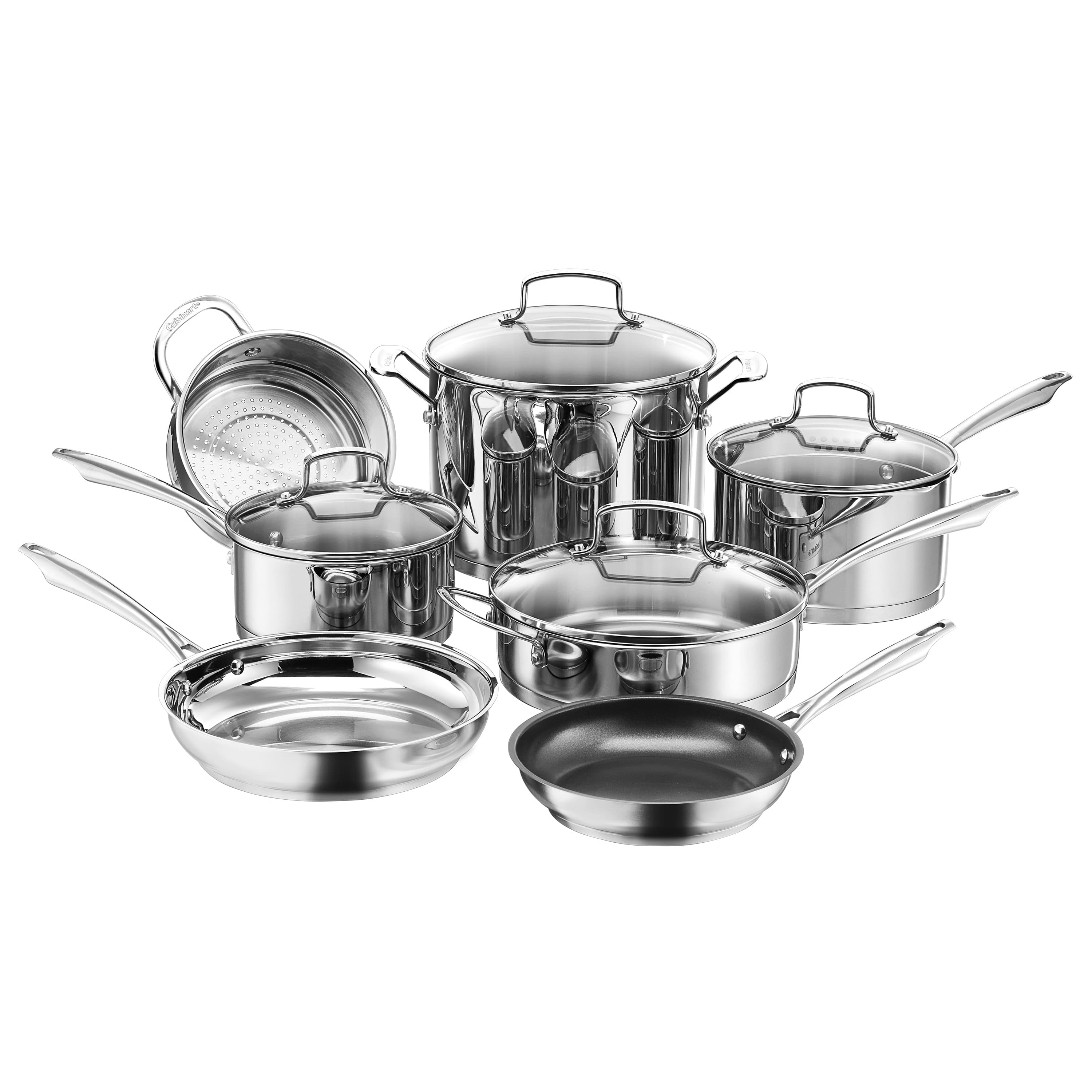
Value stainless
Nonstick upgrade
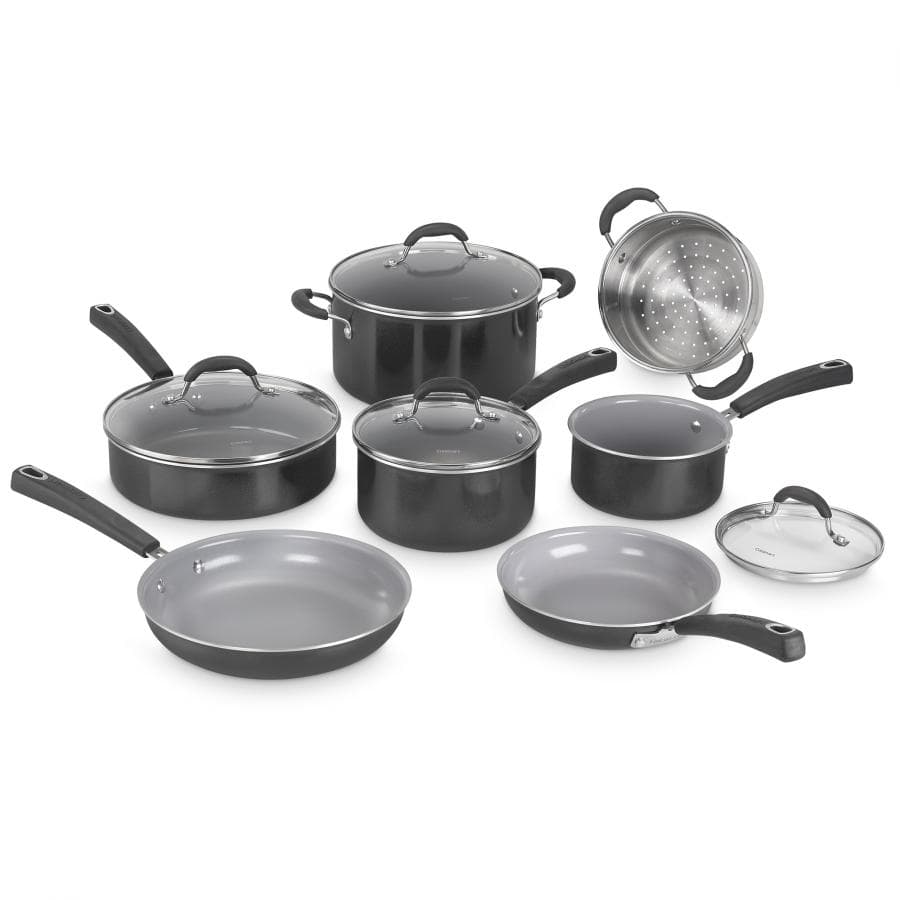
Ceramic alternative
Starter convenience
Heat-retention specialist
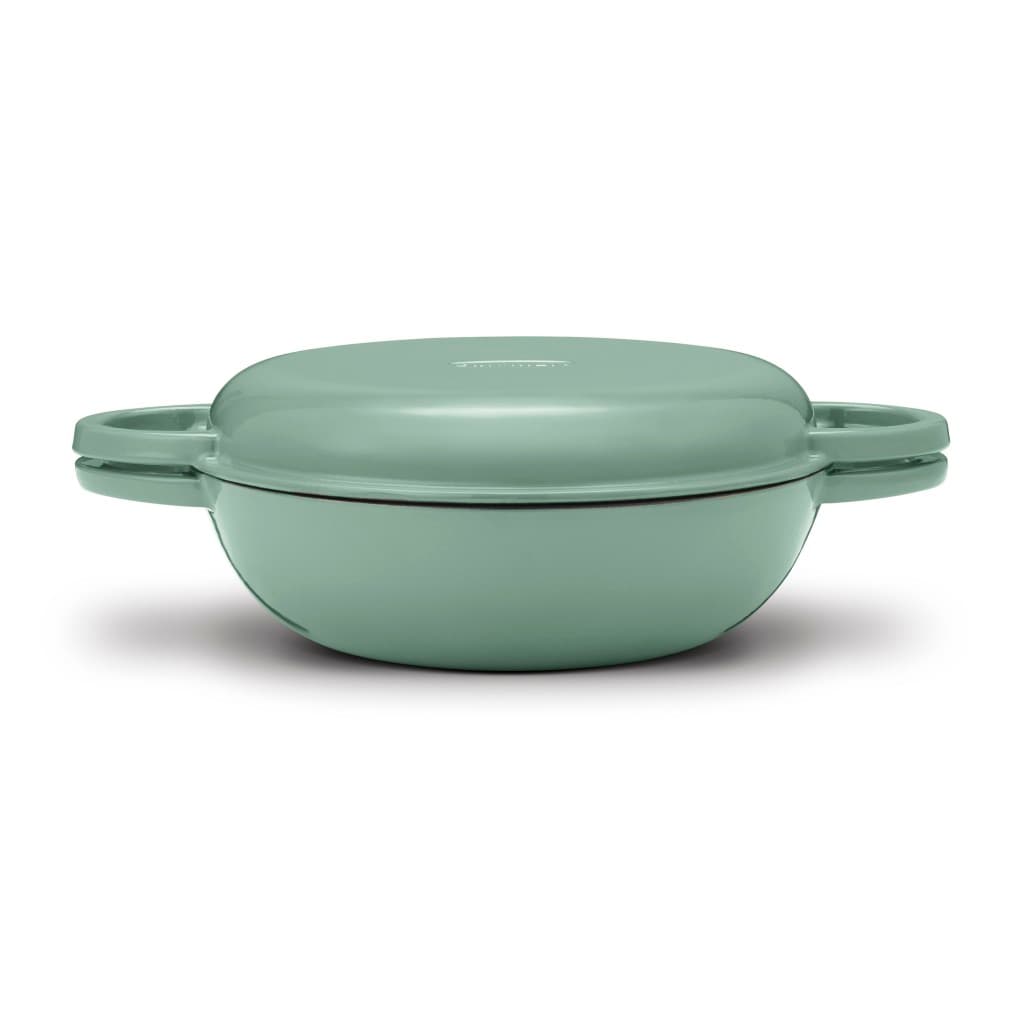
Compatibility summarizes current manufacturer line guidance. Marketplace and legacy model numbers can differ, so verify the exact set before purchase.
Most kitchens benefit from stainless as the durable core and one nonstick skillet for foods that punish an uncoated surface.
The difference you can feel
Stainless steel is durable but not a great heat conductor by itself. The aluminum layer's location changes how quickly a pan responds and whether heat spreads beyond the flat cooking surface.
01 · Fully clad
MultiClad Pro sandwiches aluminum between stainless layers across the whole vessel. Heat reaches the sidewalls, which helps with sauteing, reducing sauces, and even simmering.
Best expression: MultiClad Pro02 · Bonded or encapsulated base
Chef's Classic Stainless and Professional Series concentrate aluminum at the base. This is practical for boiling and everyday cooking, but it is not the same heat path as full cladding.
Best value: Chef's Classic Stainless03 · Coated aluminum
Hard-anodized and ceramic nonstick lines heat quickly and release food easily. Their tradeoff is the cooking surface: moderate heat and gentler tools preserve performance.
Best convenience: Hard Anodized| Construction | Heat control | Food release | Learning curve | Long-term role |
|---|---|---|---|---|
| Fully clad stainless | Most responsive | Technique-dependent | Higher | Durable kitchen core |
| Base-clad stainless | Strong at the floor | Technique-dependent | Moderate | Value-oriented core |
| Hard-anodized nonstick | Fast and forgiving | Easiest | Low | Convenience specialist |
| Enameled cast iron | Slow, high retention | Moderate | Moderate | Braising specialist |
Interactive kitchen match
Your cooktop narrows compatibility. Your most-cooked foods decide the surface. Your buying horizon separates a long-term core from a lower upfront-cost set.
Best performance match
Fully clad triple-ply stainless is the strongest fit for browning, pan sauces, induction, and a kitchen built around long-term versatility.
Know before buyingIt rewards heat control and preheating technique; it is not the easiest surface for eggs.
Match logic uses construction, declared cooktop compatibility, and the cooking priorities above. Re-check the exact model number and current listing before purchase.
Piece-count reality check
Manufacturers count lids, steamer inserts, and accessories as pieces. A bigger number can still produce a less useful kitchen if the skillets are small or the bundle duplicates capacities you already own.
illustrative bundle
An illustrative mix of skillets, saucepans, saute pan, and stockpot.
Useful, but they are not four additional cooking vessels.
A possible steamer, helper piece, or other counted component. Exact sets vary.
You need at least two saucepans, two skillets, and a stockpot, and the sizes match your burners and household.
You already own good cookware, have limited storage, or want to mix stainless with one replaceable nonstick skillet.
A 10-inch skillet, 3-quart saucepan, covered saute pan, and 6-to-8-quart stockpot cover most home kitchens.
Cooktop and oven check
Induction needs a magnetic base. Oven safety depends on the entire piece, including handles, lids, knobs, and coatings. Model numbers matter more than a familiar product-family name.
| Current line | Induction | Gas | Electric | Oven |
|---|---|---|---|---|
| MultiClad Pro | Yes | Yes | Yes | Up to 500°F* |
| Professional Series | Yes | Yes | Yes | Up to 500°F* |
| Chef's Classic Stainless | Yes* | Yes | Yes | Check model |
| Hard Anodized Nonstick | Usually no* | Yes | Yes | Check coating |
| Ceramica XT | No* | Yes | Yes | Up to 350°F* |
| Enameled Cast Iron | Yes | Yes | Yes | Check piece |
Current and legacy bundles can use different bases, lids, handles, or coatings. For induction, look for explicit compatibility language or perform the magnet test on cookware you already own.
Induction guideCook around your everyday
A useful kitchen is built around the shapes and sizes you reach for. Match the surface to the food, then decide which extras earn their space.
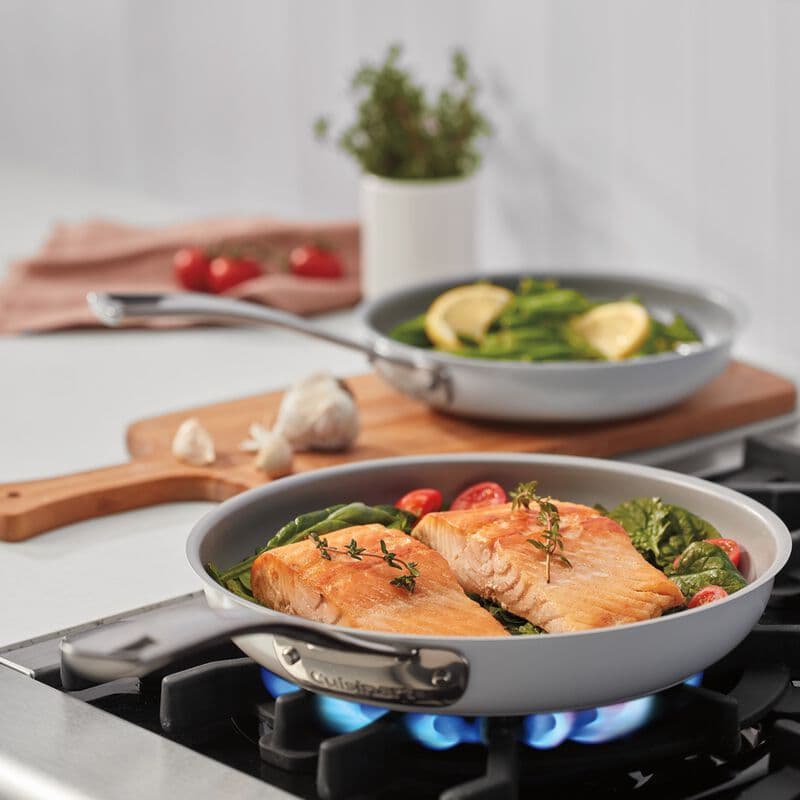
Sloping sides help with turning and serving. Choose a nonstick surface for delicate foods or compare stainless steel when browning and pan sauces are part of your routine.
Check the flat cooking area, the full handle length and the weight when filled.
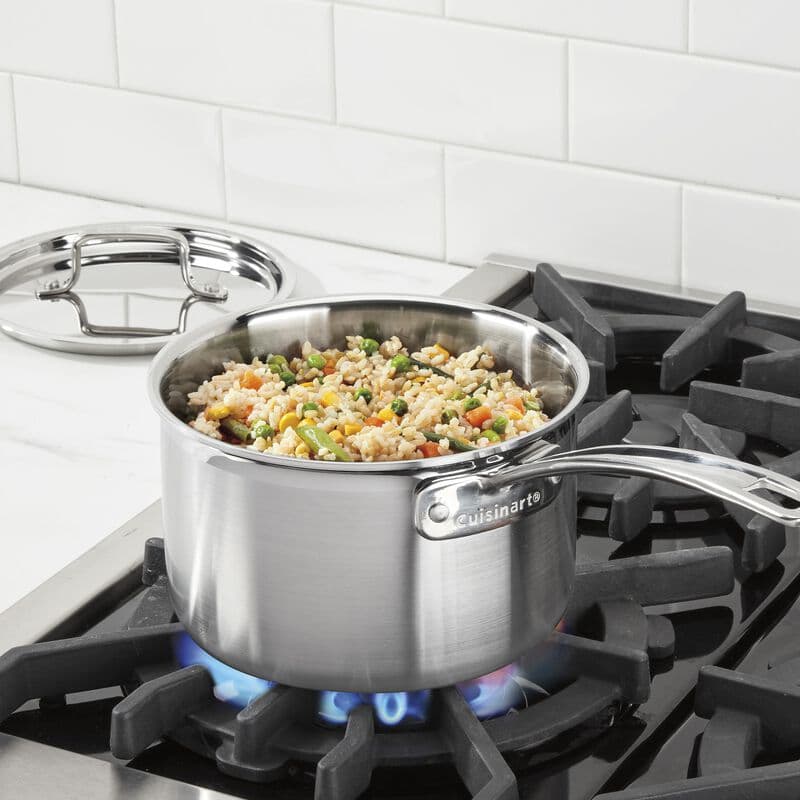
A saucepan suits smaller portions of rice, oats and sauces. A deeper stockpot adds capacity for pasta and soup; a steamer is useful only when it fits the pot you own.
Compare capacity, lid fit and the space needed under your tap and inside your cupboard.
Before the kitchen refresh
Compare the cookware base with your stove’s size guidance. For induction, check the exact model’s compatibility as well as the diameter of its magnetic base.
Measure the overall length, including the handle, and the height with the lid. Leave room to lift a stack without rubbing cooking surfaces together.
Write down the meals and quantities you cook most. Several similar pans can add piece count while leaving the one size you need missing.
Make the set last
Good cookware can be ruined by the wrong heat, tool, or cleaning routine. Open the material you are buying before you buy it.
Before cooking: Preheat gradually, then add oil. Food should meet a hot, lubricated surface rather than a cold dry pan.
After cooking: Deglaze while warm, soak stubborn residue, and use a stainless-safe cleaner for polymerized oil or rainbow tint.
Avoid: Thermal shock, unattended high heat, and assuming every discoloration is permanent damage.
Before cooking: Use low-to-medium heat unless the exact manual says otherwise. A small amount of fat can improve browning and surface life.
After cooking: Let the pan cool, then use dish soap and a soft sponge. Protect the interior when stacking.
Retire it when: The surface flakes, peels, exposes the substrate, or no longer releases food after proper cleaning.
Before cooking: Warm it gradually and match the burner to the base. The retained heat does the work.
After cooking: Soak cooked-on food and avoid impacts that can chip enamel around rims and handles.
Avoid: Sliding heavy pieces across glass cooktops or moving a hot vessel onto a cold wet surface.
Make a considered choice
Construction — We separate fully clad cookware from bonded and encapsulated-base designs.
Set usefulness — We count usable vessels, then identify lids, inserts, and filler pieces.
Cooking fit — We match surfaces to browning, delicate foods, induction, cleanup, and weight.
Claim checking — Current manufacturer pages and manuals lead; marketplace details are re-checked.
Product and collection photographs are from Cuisinart. Check the seller’s current photographs and included-item list for the selected bundle.
Manufacturer references
Use the manufacturer references to confirm the exact model, cooktop compatibility and instructions before ordering. Bundles and product revisions can differ.
Construction, intended use, and current line-level induction guidance.
Triple-ply construction, cooktop compatibility, care, and oven limit.
PowerBond base, included vessels, glass lids, and stated compatibility.
Magnet test, magnetic base requirements, and model-level verification.
Buyer questions
For most shoppers who want stainless performance, Cuisinart MultiClad Pro is the first set to compare. Chef's Classic Stainless is better for budget stainless, while Chef's Classic Nonstick and Advantage Nonstick are better for easy release.
MultiClad Pro is worth comparing if you want fully clad stainless cookware for searing, sauces, induction cooking, and longer-term durability. It is less ideal if you mainly cook eggs and want effortless release.
Some Cuisinart cookware is marketed as induction compatible, especially stainless lines, but compatibility varies by exact set. Always verify the current listing and model details before buying for induction.
Buy stainless for searing, durability, pan sauces, and metal-utensil tolerance. Buy nonstick for eggs, pancakes, delicate foods, and fast cleanup. Many kitchens benefit from one of each.
No. We intentionally do not copy Amazon prices, star ratings, or availability because they can change quickly. Affiliate links open the current Amazon search results so you can verify the exact seller, model number, price, and delivery details before purchase.
MultiClad Pro uses fully clad triple-ply construction, so its aluminum core extends through the base and sidewalls. Chef's Classic Stainless uses an aluminum-encapsulated base, making it the lower-cost choice but not the same heat-distribution design.
Yes. Cookware set totals commonly include lids, steamer inserts, and accessories as separate pieces. Compare the number and size of actual cooking vessels instead of judging a bundle only by the advertised piece count.
Many Cuisinart lines are oven safe, but the temperature limit varies by body, handle, lid, knob, and coating. Current MultiClad Pro and Professional Series product pages state oven safety up to 500°F, while the current Ceramica XT set states 350°F. Verify the exact model before use.
Choose the pieces you need, confirm the exact model, and keep your purchase details and care instructions together.
Explore the cookware ↗As an Amazon Associate I earn from qualifying purchases.